
Site search Web search Search this site or the web powered by FreeFind










 Click here to add this
page to your favorites folder!
Click here to add this
page to your favorites folder!
Persecution in Chiapas, Mexico
Strategizing an
humanitarian response

Laurent J. LaBrie II, Disaster Relief Coordinator
Dateline: October 7-11, 1996Objective:
To provide medical and economic assistance to persecuted Christians in Chiapas, Mexico who are being persecuted for their faith.
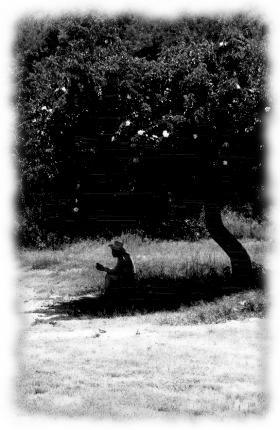 Arriving in Chiapas, I
was struck by the poverty of the people. Yet, when all
earthly hope appeared wiped away, we uncovered an inner hope that
only God could have given them. The Mexican Country Director and
I sat with the people and listened to their stories. It was
enough to make you cry. Fathers murdered and mothers raped in
front of their children.
Arriving in Chiapas, I
was struck by the poverty of the people. Yet, when all
earthly hope appeared wiped away, we uncovered an inner hope that
only God could have given them. The Mexican Country Director and
I sat with the people and listened to their stories. It was
enough to make you cry. Fathers murdered and mothers raped in
front of their children.The landowners were actually slave owners, not paying the labor enough money to survive on their own. They exercised their "right" to have the first night with any newly wed virgin bride. Infants were immediately addicted to hard liquor by the landowners who put it on their lips from birth. Of course, the landowners sold them the alcohol as they grew up, at high prices.
We saw their pictures, houses destroyed, and pastors burned alive. We saw a people living in makeshift homes on land borrowed from the government. Their possessions were only what they could carry in their flight from their burning homes. Many of these people had been in the march from Chiapas, hundreds of miles to Mexico City to get an audience with the President. Little attention was paid to them.
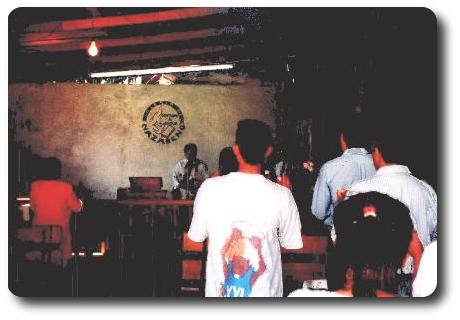 For this, we had come--to pay attention, to listen, to learn, to walk
beside them for a moment. From 2 o'clock in the afternoon for
two hours we listened to their stories, with my partner taking notes.
I was racking my brain for the Boston University MBA course
that would have prepared me for dealing with this situation.
For this, we had come--to pay attention, to listen, to learn, to walk
beside them for a moment. From 2 o'clock in the afternoon for
two hours we listened to their stories, with my partner taking notes.
I was racking my brain for the Boston University MBA course
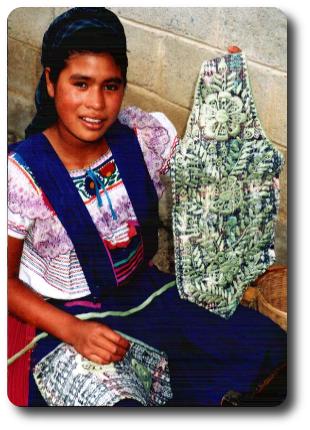
that would have prepared me for dealing with this situation. >From my experience as a Regional Volunteer Coordinator with Compassion International, I knew the answer to their situation was to get them involved in the solution, not to get them dependent on some US handout program. I asked them, "What are your talents and abilities?" They faces lit up. One man called his wife. They pulled out some of the most beautiful hand-made clothing I think I had ever seen.
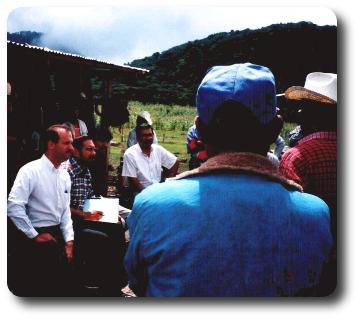 Then,
we toured their houses, spoke with their wives and children. The
women told me that they just barely could make ends meet by sewing
because they didn't have any thread. They had to buy the thread
from taskmasters who paid them just enough for their work to allow
them to buy the thread for the next item and a bit of food for their
family. I saw the work of their hands. By 5PM it struck
me. "How can we enable you to become economically
self-sufficient in producing clothing?" It amazed me that for
under a hundred dollars, we could start their micro-enterprises.
Then,
we toured their houses, spoke with their wives and children. The
women told me that they just barely could make ends meet by sewing
because they didn't have any thread. They had to buy the thread
from taskmasters who paid them just enough for their work to allow
them to buy the thread for the next item and a bit of food for their
family. I saw the work of their hands. By 5PM it struck
me. "How can we enable you to become economically
self-sufficient in producing clothing?" It amazed me that for
under a hundred dollars, we could start their micro-enterprises.
In the end, our program included the following components:
- Donation of seed corn to allow the men to grow crops.
- Donation of thread to allow the women to develop sew clothing
- A health clinic for their health needs. Doctors would
be provided from NWMTI.
All this depended on cooperation and good relationships with the community, so I encouraged the Country Director to speak with the local authorities and priest to show due respect.
If
you are interested in the way I work,  me at
me at 

Romania:
Phone: (4) 0722.889.267
Address: Post Restant
115300 Curtea de Arges (AG)